
Surviving the Shadows: The Journey of Finding My Voice
Surviving the Shadows: The
Journey of Finding My Voice
By Connor Hearn
When I was nine years old, my world fractured. Just before the COVID-19 lockdown, my parents broke up. For a kid who thrived on stability, my dad moving out straight away was a devastating shock.
Read on for more details…

Suddenly, my mum was left alone, carrying the weight of a broken family with no support outside of my older brother. My head was constantly spinning. I became so consumed with worrying about everyone else that I completely neglected myself. My anxiety levels skyrocketed, triggering nightly nightmares and daily panic attacks. When school transitioned online, it amplified our struggles; my mum has dyslexia, making it incredibly difficult for her to guide us through remote learning. My older brother bravely stepped up, and together, we established tight routines just to survive the lockdown.
For a brief window, those routines brought a fragile sense of stability, and my mental health began to steady. But when lockdown lifted and I turned 11, life shifted again. My mum found a new partner. Initially, I felt proud of her for overcoming such a dark period and moving on. But as she moved forward, I pulled back. Feeling unloved and entirely left out, I completely stopped talking to my dad. Depression took hold, leaving me zoned out and detached from reality. I didn’t speak a single word to him for over six months.
During that period of silence, the atmosphere at home turned toxic. My mum’s new girlfriend revealed herself to be deeply manipulative and mentally abusive. She targeted my mum, my brother, and my sister, while labelling me the “favourite”; a title I despised. This psychological warfare tore my siblings and me apart, causing constant arguments. They couldn’t see how hard I was working behind the scenes to shield them from her wrath, knowing the abuse that followed any perceived mistake. She completely altered how we lived, trapping us indoors. Apart from school, we were forced to clean the house all day. My panic attacks returned with a vengeance, bleeding into shops and public spaces. I reached out to Steps in Swindon, a youth mental health project, but fear kept me from sharing the full truth. Every time I tried to talk to my mum privately, her partner would sit right outside the door, listening to ensure I stayed silent.
The isolation worsened my depression, leaving me unable to communicate with the people I loved. Desperate, I wanted to run away. The chronic stress soon triggered an eating disorder; when my mum was at work, her partner would punish us by serving half-portions at dinner. I barely ate during the day and felt physically sick whenever I did.
When my mum was home, the mask slipped back on. She would let us go out, play, and just be kids. If we misbehaved, she disciplined us normally, but her partner constantly exaggerated incidents to turn her against us. Then, the psychological abuse turned physical. While my mum was at work, her partner began physically assaulting my sister; grabbing her wrists and slamming her into doors, leaving deep bruises. We were terrified into absolute silence.
Simultaneously, my school life became a living nightmare. I was constantly targeted by bullies, and one afternoon, while walking home on a public path, my brother and I were threatened with a machete by two people on a motorbike. It was the absolute lowest point of my life. Paralyzed by fear, I simply did not want to be here anymore. At just 12 years old, I wrote a suicide note.
Discovering the note saved my life. My mum immediately pulled me out of school and moved me to Weymouth to receive 24-hour care from my nan. In that safe space, I finally opened up and told my nan everything. Soon, my siblings joined us, and my mum relocated to Weymouth for work, finally ending the abusive relationship. I was overjoyed; the nightmare was over, and my health improved drastically.
However, recovery isn’t a straight line. At age 13 and 14, bullying resurfaced at my new school, leading to physical fights. The familiar weight of stress took over, and my eating disorder returned. I restricted my food to a single bowl of cereal and dinner. My weight plummeted to just seven stone, dangerously low for my 5-foot-10 frame. Sensing the danger, my mum enrolled me in specialist eating disorder counselling. Today, I am proudly rebuilding my weight and, more importantly, learning healthy coping mechanisms to handle life when things go wrong.
My journey gave birth to my purpose. To launch a campaign to support anyone facing overwhelming life challenges, raise funds for charities, and to spread mental health awareness. My past has shaped my entire worldview, and I am dedicated to ensuring that no young person has to transition into adulthood feeling entirely alone, without support, or without someone to talk to.
Finding Community with Dorset Mind
We have a variety of support groups that may be right for you! Visit https://dorsetmind.uk/what-we-offer/adult-services/adult-groups/ to explore our range of support groups for people facing mental health challenges.
You can also explore a variety of volunteering and fundraising opportunities on our website. Our welcoming community of volunteers, (many with lived experience of mental health challenges or supporting a loved one) helps ensure that no one faces these difficulties alone. Volunteering is a fantastic way to meet new people, build connections, and make a meaningful difference in the community.
Visit dorsetmind.uk for a range of resources and support. If you are worried about your mental health, please visit your GP or a mental health professional. In a crisis, please call 999 or The Samaritans at 116 123.
Related News
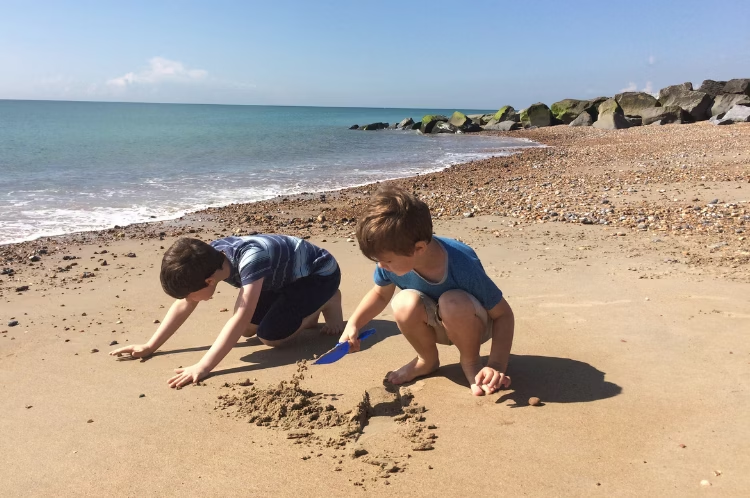
Not every child experiences the summer holidays with complete joy. Some young people genuinely prefer the structure of school and may experience mixed emotions as they miss their friends, teachers, and daily routines.

In this blog post, Connor Hearn, writes about surviving the shadows: his Journey through trauma, mental health, and finding his voice (Family, Society and Mental Health)

I want to bring a little bit of light to people who might be struggling in silence. If this van can help even one person feel less alone, then every cup served is worth it.

This emotive blog is Charlotte's fifth - in a series where she has documented her transition and experiences to becoming her real self.

Liam’s Bench has officially arrived at Furzy Cliff in Weymouth, bringing colour, comfort and a gentle encouragement to talk about mental health. Created in partnership with Dorset Tea and beautifully designed by local artist Helena Chessher, the bench is part of our growing Chatty Bench project.

In this blog post, Alex Milo, our Access Wellbeing Coordinator, North Dorset, writes about how men often socialise and why it matters for our mental well-being.
Please support our work
Dorset Mind is a self-funded local charity that helps people in Dorset experiencing mental health problems access the vital support they need. The charity is at the very heart of our communities shaping futures, changing and in some cases literally saving lives.

