
Navigating Summer Break: Guide for Supporting Young People
Navigating Summer Break: A Guide for Supporting Young People Through Holiday Transitions
By Eleri Horsington
The transition from a structured academic year into the long summer break can be an exciting prospect for many children. However, removing a familiar school routine can also feel overwhelming for young people.

For parents and caregivers, managing this shift requires balancing activity, emotional support, and consistency.
Maintaining Stability and Routine
Young people often thrive when their days have a sense of structure. While the summer break does not demand a strict, week-long school timetable, providing basic predictability can foster stability. Keeping roughly consistent waking and sleeping schedules, alongside regular mealtimes, gives children a stable footing.
A healthy routine also balances active periods with necessary downtime. Parents do not need to fill every single gap in the day; allowing children time to rest and enjoy a slower pace is a crucial component of a balanced lifestyle.
Balancing Activities and Screen Time
When planning summer activities, getting outdoors and promoting movement are highly encouraged. Spending time in nature, visiting the beach, or taking walks in the park offers invaluable play time and is usually entirely free. Families in the Dorset area can explore local options, such as farm attractions or water parks, though these may carry a cost.
For rainy days, when outdoor recreation is not possible, indoor options like board games are excellent alternatives. A key challenge during these months is managing screen time. While a small amount of screen time is perfectly acceptable, it is important to set healthy limits, encouraging children to remain present and engaged with the physical world around them.
Supporting Social Connections and Emotional Wellbeing
Not every child experiences the summer holidays with complete joy. Some young people genuinely prefer the structure of school and may experience mixed emotions as they miss their friends, teachers, and daily routines. Others may face acute anxiety regarding upcoming major life transitions, such as moving up into secondary school. Acknowledging these complex feelings and letting children know it is normal to feel conflicted is a vital step in supporting their wellbeing.
To combat isolation, parents should actively help their children stay socially connected. Grounded in the “five ways to wellbeing,” maintaining social ties is essential for a young person’s mental health. This connection can take many forms, from meeting friends at local sports clubs or parks to staying in touch via video calls.
Practical Advice for Parents
The most important takeaway for caregivers is that they do not need to manufacture a “perfect” or expensive summer. What young people benefit from the most is simply spending quality time with family, having a predictable baseline routine, and knowing they have trusted individuals to talk to. Open communication is essential: parents should openly check in on their children, ask them what they need from their time at home, and ensure their basic nutritional and sleep needs are met. By keeping these communication lines open and maintaining a thread of routine throughout the holidays, the eventual wind-down and transition back into the school term will be a far smoother process for the entire household.
Finding Community with Dorset Mind
We have a variety of support groups that may be right for you! Visit https://dorsetmind.uk/what-we-offer/adult-services/adult-groups/ to explore our range of support groups for people facing mental health challenges.
If your mental health is affecting your ability to function day to day, please contact your GP or mental health professional. At DorsetMind.uk Our dedicated Young People’s Service team run group and 1:1 programmes like Connected Minds and Community Active Monitoring which are part of our Waiting Well Programme.
Our vision is simple: Every young person in Dorset should have access to early mental health support.
Related News
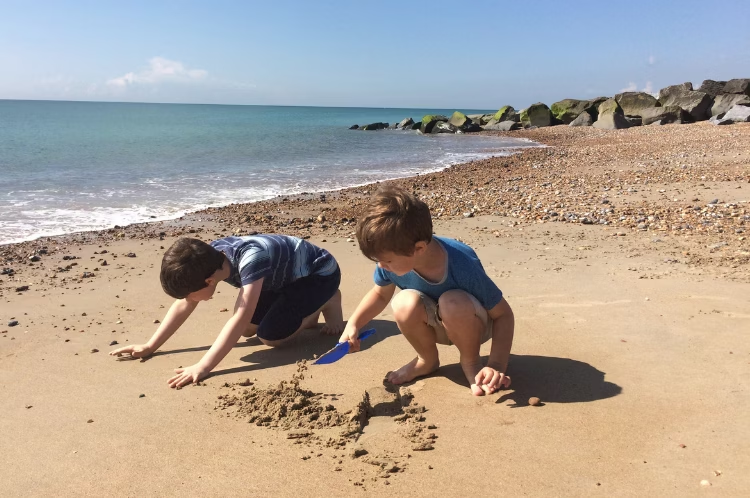
Not every child experiences the summer holidays with complete joy. Some young people genuinely prefer the structure of school and may experience mixed emotions as they miss their friends, teachers, and daily routines.

In this blog post, Connor Hearn, writes about surviving the shadows: his Journey through trauma, mental health, and finding his voice (Family, Society and Mental Health)

I want to bring a little bit of light to people who might be struggling in silence. If this van can help even one person feel less alone, then every cup served is worth it.

This emotive blog is Charlotte's fifth - in a series where she has documented her transition and experiences to becoming her real self.

Liam’s Bench has officially arrived at Furzy Cliff in Weymouth, bringing colour, comfort and a gentle encouragement to talk about mental health. Created in partnership with Dorset Tea and beautifully designed by local artist Helena Chessher, the bench is part of our growing Chatty Bench project.

In this blog post, Alex Milo, our Access Wellbeing Coordinator, North Dorset, writes about how men often socialise and why it matters for our mental well-being.
Please support our work
Dorset Mind is a self-funded local charity that helps people in Dorset experiencing mental health problems access the vital support they need. The charity is at the very heart of our communities shaping futures, changing and in some cases literally saving lives.

